
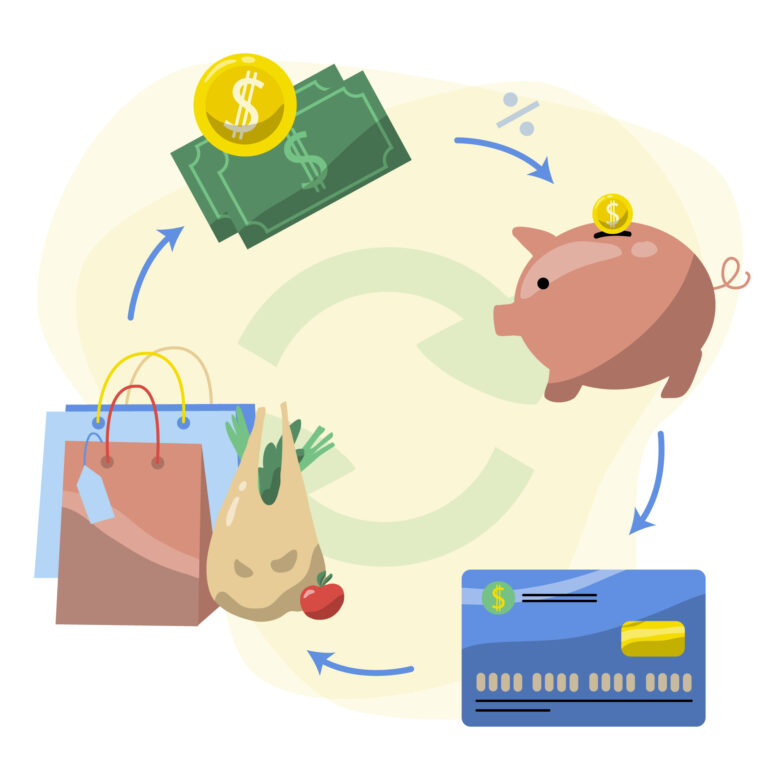
Household borrowing does not expand or contract randomly. Instead, it moves within broader credit cycles, shaped by monetary policy, regulatory oversight, labor market conditions, and capital market funding dynamics. Consumer credit markets—including mortgages, auto loans, credit cards, and unsecured personal loans—operate within regulatory frameworks that influence how debt accumulates, is serviced, and is resolved.
When liquidity is abundant and lending standards are relaxed, credit growth accelerates. During tightening phases, deleveraging pressures increase, affecting both spending behavior and financial intermediation flows. Understanding household credit cycles is critical, as these cycles have significant implications for systemic financial stability, borrower behavior, and macroeconomic outcomes.
Regulators closely monitor these cycles because household credit patterns are closely linked to systemic risk. Rising delinquency rates can weaken bank capital buffers and reduce the performance of securitized assets. Conversely, rapid credit expansion may indicate overheating asset prices or misaligned underwriting practices. Household borrowing cycles, therefore, reflect the intersection of family income flows, financial market conditions, regulatory measures, and macroeconomic trends.
Credit Growth Phases and Lending Incentives
Credit expansion phases often coincide with accommodative monetary policy and favorable labor market conditions:
- Lower interest rates reduce borrowing costs, supporting higher asset valuations, particularly in housing markets.
- Financial institutions respond by increasing loan origination volumes, often supported by stable funding through deposits or securitization channels.
Underwriting Behavior
- During prolonged expansion, underwriting standards may loosen. Competition for market share can encourage relaxed income verification requirements or longer loan terms.
- Risk-based pricing models may adjust to perceived stability, sometimes compressing credit spreads.
- Risk committees balance growth objectives with regulatory capital requirements, though optimistic macroeconomic assumptions may influence lending thresholds.
Role of Securitization
- Securitization channels facilitate further lending. Consumer credit pools are packaged and sold to investors, freeing balance sheet capacity for additional origination.
- Investor appetite for yield-bearing assets incentivizes increased lending.
- These capital flows amplify expansionary dynamics, connecting household borrowing to broader financial market conditions.
Positive Feedback Loops
- Rising asset values increase collateral availability for secured loans.
- Borrowers may extract equity or refinance on favorable terms.
- Such feedback loops can sustain credit growth beyond basic income expansion, reinforcing cyclical momentum in consumer finance systems.
Household Balance Sheets and Income Volatility
Household credit cycles are closely tied to income patterns and job stability:
- Stable income growth allows debt servicing burdens to remain manageable even as total borrowing rises.
- Income volatility, especially from gig economy work or variable earnings, complicates underwriting.
During economic downturns:
- Households with limited savings buffers may experience rapid delinquency increases.
- Debt cycles are therefore connected to savings behavior and social safety net structures.
Debt-to-Income Ratios
- Serve as a common metric for evaluating repayment sustainability.
- Elevated ratios during expansion may appear manageable when interest rates are low, but become burdensome if rates rise or incomes contract.
- Regulatory frameworks often incorporate stress testing assumptions to assess potential household resilience under adverse conditions.
Distributional Impacts
- Higher-income households may use debt for asset acquisition, while lower-income borrowers may rely on credit for consumption smoothing.
- These segments exhibit different sensitivities to economic shocks, influencing aggregate delinquency patterns during contractionary phases.
Monetary Policy, Interest Rate Transmission, and Funding Costs
Interest rate changes influence debt cycles through multiple channels:
- Central bank tightening increases borrowing costs, affecting both new loan origination and adjustable-rate debt servicing.
- As rates rise, affordability constraints reduce new credit demand, while existing borrowers face higher repayment obligations.
Funding costs for lenders also adjust:
- Higher rates increase deposit costs or securitization yields, compressing net interest margins.
- Lenders may respond by tightening underwriting standards or repricing risk to maintain capital adequacy.
Yield Curve and Credit Supply
- Flattened or inverted yield curves may discourage long-term lending due to compressed spreads.
- Credit supply can contract before borrower performance deterioration is evident.
Product Sensitivity
- Fixed-rate mortgages exhibit slower transmission to borrowers compared to variable-rate loans or credit card balances.
- Adjustable-rate exposures can rapidly increase repayment stress, amplifying short-term credit cycle volatility.
Monetary policy normalization often coincides with broader deleveraging cycles:
- Slower credit growth may help contain inflation but may also reduce household consumption and economic output.
- Policymakers consider these trade-offs when calibrating interest rate decisions.
Delinquency Waves, Loss Provisioning, and Capital Buffers
Credit cycle contractions become visible through rising delinquency and default rates:
- As repayment stress increases, lenders raise loan loss provisions.
- Accounting standards require forward-looking credit loss estimates, integrating macroeconomic scenarios into reserve calculations.
Implications for Capital
- Higher provisioning reduces reported profits and can affect regulatory capital ratios.
- Lenders may adjust loan origination volumes to preserve capital buffers, reinforcing contractionary pressures.
Securitization Effects
- Elevated defaults may trigger credit enhancement mechanisms in securitized portfolios, redistributing losses among tranches.
- Market repricing of asset-backed securities can affect funding availability for originators.
Loss Mitigation Strategies
- Collections and loan modification programs aim to reduce loss severity.
- Short-term forbearance can stabilize repayment flows during economic disruptions.
- Regulatory guidance shapes allowable restructuring practices, balancing borrower relief with prudential integrity.
Feedback on Household Consumption
- Reduced access to credit and increased repayment obligations limit discretionary spending.
- Credit contraction interacts with macroeconomic demand, affecting economic recovery trajectories.
Regulatory Interventions and Macroprudential Tools
Supervisors deploy macroprudential measures to manage excessive debt accumulation:
- Loan-to-value (LTV) caps and debt-to-income (DTI) limits control risk concentration during expansionary phases.
- Countercyclical capital buffers smooth credit cycle volatility without stifling sustainable growth.
Consumer protection measures complement prudential oversight:
- Clear disclosure requirements and responsible lending standards shape credit allocation patterns.
- During stress periods, regulators may permit flexible restructuring to prevent systemic escalation.
Capital requirements adapt to evolving risk profiles:
- Higher risk weights for certain loan types restrain overextension in overheated segments.
- Stress testing evaluates how household credit portfolios would perform under severe economic downturns.
Fiscal policy also affects credit cycles:
- Stimulus payments, unemployment benefits, and targeted relief programs stabilize household balance sheets, mitigating delinquency spikes.
- Coordination between monetary authorities and regulators enhances household credit resilience.
Structural Shifts in Consumer Credit Channels
Technological innovations have reshaped household credit architecture:
- Digital lending platforms, buy-now-pay-later (BNPL) services, and peer-to-peer lending expand access beyond traditional banking channels.
- These developments affect the flow of the credit cycle by diversifying origination sources.
Nonbank Lenders
- Nonbank financial institutions often operate under different regulatory frameworks, influencing capital requirements and lending flexibility.
- During expansion, these channels may accelerate credit growth. During contraction, funding constraints can lead to abrupt credit supply reductions.
Data Analytics and Alternative Credit Scoring
- Algorithmic underwriting can improve allocation efficiency but introduces model risk if assumptions become unstable under stress.
- Supervisory bodies increasingly assess algorithmic governance within household lending ecosystems.
Systemic Implications
- The diversification of credit channels contributes to the complexity and resilience of credit cycles.
- Traditional banking dominance is giving way to a more distributed lending environment, requiring robust regulatory oversight to monitor aggregate credit trends.
Conclusion
Household credit cycles reflect the interaction of monetary policy, financial market conditions, household balance sheets, and regulatory oversight.
- Expansion phases often coincide with accommodative liquidity conditions and rising asset values, encouraging borrowing and consumption.
- Contraction phases feature rising delinquency rates, tighter credit supply, and increased provisioning.
- Institutional responses—including macroprudential interventions and calibrated lending practices—modulate cycle amplitude.
Regulatory coordination strengthens the link between conduct supervision and prudential oversight. Balanced capital structures in lending institutions rely on appropriate provisioning and prudent underwriting standards. Systemic risk recalibration occurs through stress testing and targeted policy tools, while funding normalization aligns credit growth with household income fundamentals.
Understanding household credit cycles is essential for policymakers, lenders, and investors. Awareness of these dynamics supports sustainable credit expansion, mitigates systemic shocks, and strengthens overall financial stability.
Key Takeaways
- Household borrowing moves within broader credit cycles, influenced by interest rates, labor markets, and regulatory measures.
- Expansionary phases can create positive feedback loops through rising asset values and securitization.
- Income volatility and debt-to-income ratios are central to household repayment capacity.
- Monetary policy impacts both credit demand and lender funding costs.
- Rising delinquency triggers loss provisioning, capital buffer adjustments, and credit repricing.
- Macroprudential tools smooth cycles without suppressing sustainable credit growth.
- Technological and nonbank lending innovations introduce both efficiency gains and new risks.
FAQs
1. What drives household credit cycles?
Interest rates, labor market conditions, household income stability, regulatory frameworks, and capital market funding all influence credit expansion and contraction.
2. How do regulators manage household debt risks?
Through macroprudential tools like LTV and DTI limits, stress testing, capital requirements, and responsible lending guidelines.
3. What role does income volatility play in credit cycles?
Variable earnings increase repayment risk and can accelerate delinquency during economic downturns.
4. How does securitization affect credit cycles?
By freeing bank balance sheet capacity and attracting investor funding, securitization amplifies credit growth but may transmit risk to investors.
5. How are technological innovations shaping consumer credit?
Digital lending, BNPL services, and algorithmic credit scoring expand access, diversify origination, and require enhanced oversight to manage systemic risk.