Most people consider the financial system to be something distant—banks, governments, and global markets operating far beyond everyday life. But in reality, the financial system quietly shapes nearly every financial decision you make. From the interest rate on your savings account to the cost of borrowing money, from inflation affecting your grocery bill to the stability of your job—these are all outcomes of how the financial system operates.
Understanding this connection is not just for economists or investors. It’s essential for anyone who wants to make smarter financial decisions, protect their money, and build long-term financial security. When you begin to see how the system works, you gain clarity—and with clarity comes control.
This article breaks down how the financial system directly impacts your personal finances in practical, real-world terms.
What Is the Financial System?
At its core, the financial system is a network of institutions, markets, regulations, and technologies that facilitate the flow of money in an economy. It includes:
- Banks and credit institutions
- Financial markets (stocks, bonds, etc.)
- Central banks and regulators
- Payment systems and financial technologies
If you want a deeper understanding of how these components interact, you can explore the Structural Architecture of Modern Financial Systems, which explains the foundational structure in detail.
How Interest Rates Shape Your Financial Life
The Cost of Borrowing
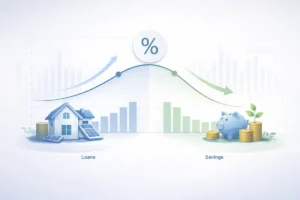
Interest rates determine how expensive it is to borrow money. Whether it’s a personal loan, car financing, or a mortgage, even a small change in rates can significantly impact your total repayment.
- Higher interest rates = more expensive loans
- Lower interest rates = cheaper borrowing
This is why timing matters when taking loans.
The Return on Savings
Interest rates also affect how much you earn on savings accounts and fixed deposits. When rates are low, your savings grow more slowly, pushing many people to explore alternative investments.
To better understand how these changes reach consumers, read Interest Rate Transmission in Retail Banking.
Inflation and Your Purchasing Power
Why Your Money Buys Less Over Time
Inflation is one of the most direct ways the financial system affects your daily life. As prices rise:
- Your cost of living increases
- Your savings lose value if they do not grow fast enough
- Your income may not keep up
Even moderate inflation can erode purchasing power over time.
The Hidden Impact on Financial Planning
If your investments don’t outpace inflation, you are effectively losing money. This is why financial planning must always consider inflation-adjusted returns.
For a deeper look at how inflation is measured and interpreted, check Inflation Index Construction Methodologies.
Credit Availability and Your Financial Opportunities
Access to Loans and Credit Cards
The financial system determines who gets access to credit and under what conditions. Factors include:
- Credit scores
- Income stability
- Lending policies
When banks tighten lending standards, it becomes harder to access loans—even for financially responsible individuals.
Risk Assessment and Lending Decisions
Financial institutions rely on structured frameworks to evaluate borrowers. These frameworks directly affect whether your loan gets approved or rejected.
Learn more about how lenders evaluate borrowers in Underwriting Criteria in Consumer Lending.
Employment, Income Stability, and Economic Cycles
The Link Between Finance and Jobs
The financial system influences business investment. When companies have access to capital:
- They expand operations
- They hire more employees
- Wages tend to grow
When financial conditions tighten, businesses cut back, leading to layoffs or slower wage growth.
Economic Ups and Downs
Boom and recession cycles are deeply tied to financial system dynamics. These cycles directly impact:
- Job security
- Salary growth
- Business opportunities
Understanding this helps you prepare financially during uncertain times.
Banking Systems and Your Daily Transactions
Payments, Transfers, and Accessibility
Every time you transfer money, pay a bill, or use online banking, you are interacting with the financial system’s infrastructure.
Modern banking systems ensure:
- Fast transactions
- Secure payments
- 24/7 accessibility
Behind the scenes, complex processes handle these operations. You can explore this in Transaction Processing Workflows.
Security and Trust
Without trust in financial institutions, the system would collapse. Security protocols protect your money from fraud and cyber threats.
Risk Management and Financial Protection
Insurance and Financial Safety Nets
The financial system provides mechanisms to protect against unexpected losses, such as:
- Health emergencies
- Property damage
- Income loss
These protections reduce financial uncertainty and help maintain stability.
Managing Personal Financial Risk
Even at an individual level, risk management matters. Maintaining emergency funds and liquidity is crucial for financial resilience.
For practical insights, read Liquidity Buffers in Personal Financial Planning.
Government Policies and Regulations
Consumer Protection
Financial regulations exist to protect consumers from unfair practices. These include:
- Transparency in lending
- Limits on predatory interest rates
- Data protection laws
Such measures ensure that individuals are not exploited within the system.
Monetary and Fiscal Policies
Government and central bank policies influence:
- Inflation rates
- Employment levels
- Economic growth
These policies indirectly affect your financial decisions, even if you don’t notice them.
Digital Transformation and Your Financial Behavior
The Rise of Financial Technology
Technology has transformed how people interact with money:
- Mobile banking apps
- Digital wallets
- Automated investments
These innovations make financial management easier but also introduce new risks.
Data and Personal Finance
Your financial data is increasingly used to:
- Assess creditworthiness
- Personalize financial products
- Detect fraud
Understanding this helps you make informed decisions about privacy and security.
Capital Markets and Wealth Creation
Investment Opportunities
The financial system connects individuals to investment opportunities like:
- Stocks
- Bonds
- Mutual funds
These markets enable wealth creation over time.
Risk and Reward Balance
Every investment carries risk. The financial system helps distribute and manage this risk across participants.
For a deeper perspective, explore Capital Allocation and Risk Distribution in Contemporary Markets.
Practical Ways to Use This Knowledge
Understanding the financial system is useful only if applied. Here’s how you can use it:
- Time your borrowing decisions based on interest rates
- Protect your savings against inflation
- Build an emergency fund for stability
- Improve your credit profile for better loan access
- Diversify investments to manage risk
These actions help you align your personal finances with broader financial conditions.
Frequently Asked Questions
1. Why does the financial system matter to individuals?
Because it directly affects interest rates, inflation, job opportunities, and access to credit—all of which influence your financial decisions.
2. How do interest rates affect my daily life?
They determine how much you pay on loans and how much you earn on savings, impacting both spending and saving decisions.
3. Can I protect my finances from inflation?
Yes, by investing in assets that typically outpace inflation and regularly reviewing your financial strategy.
4. Why do banks sometimes reject loan applications?
Banks follow structured risk assessment models that evaluate your creditworthiness, income, and repayment ability.
5. How can I become less dependent on financial system changes?
By building strong financial habits—saving consistently, avoiding unnecessary debt, and diversifying income sources.
Conclusion
The financial system is not an abstract concept—it is deeply embedded in your daily financial life. It influences how much you earn, how much you spend, how you save, and how you invest. Ignoring it means making decisions without understanding the forces shaping your financial reality.
But when you take the time to understand how it works, everything changes. You begin to see patterns, anticipate shifts, and make smarter choices. Instead of reacting to financial changes, you start preparing for them.
In a world where economic conditions can change quickly, financial awareness is no longer optional—it’s a necessity. And the more you understand the system, the more control you gain over your financial future.