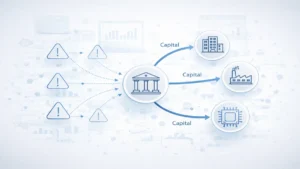

Governments, central banks, and large institutions often discuss financial stability. However, the foundation of a resilient financial system actually begins much closer to home—with households, small businesses, and nonprofit organizations. In today’s evolving economic environment, these entities are increasingly encouraged by policymakers and regulators to maintain accessible liquidity buffers that can absorb unexpected shocks.
Emergency liquidity is not just about having cash on hand. It reflects a broader, structured ability to access funds quickly, reliably, and without significant loss. This concept sits at the intersection of financial infrastructure, regulatory frameworks, and individual financial planning. Understanding how these systems work can help individuals and organizations make smarter, more resilient financial decisions.
The Expanding Role of Liquidity Beyond Traditional Banking
Historically, banks have been the central players in managing liquidity. Today, that role has expanded. Financial resilience is now seen as a shared responsibility across multiple layers of the economy. Families are advised to maintain emergency savings. Small businesses are encouraged to build cash reserves. Nonprofits are guided to secure operational buffers.
This shift reflects lessons learned from past financial crises and economic disruptions. Sudden income loss, rising living costs, or unexpected expenses can destabilize even well-managed budgets. Accessible liquidity buffers act as a first line of defense, helping to prevent short-term financial stress from turning into long-term instability.
Importantly, the effectiveness of these buffers depends on more than just the amount saved. It also depends on how quickly and safely those funds can be accessed when needed.
Why Liquidity Is More Than Just Cash
At first glance, liquidity might seem straightforward—cash in a bank account. In reality, it is more complex. Liquidity refers to the ability to convert assets into usable funds quickly, without incurring major losses or delays.
For example:
- Cash in a checking account is highly liquid.
- Funds in a savings account are slightly less immediate but still accessible.
- Investments like stocks or bonds may take time to sell and could lose value during market volatility.
This layered structure means that not all “available money” is equally useful in an emergency. A well-designed liquidity system considers both access speed and value stability.
The Role of Banks and Deposit Protection Systems
The reliability of emergency funds depends heavily on the institutions holding them. Commercial banks operate under strict regulatory requirements designed to protect depositors and maintain financial stability.
One of the key safeguards is deposit protection (often called deposit insurance). These systems guarantee customer funds up to a certain limit, reducing the risk of loss even if a bank faces financial trouble. This protection builds trust and helps prevent panic withdrawals during uncertain times.
Regulators also require banks to maintain sufficient high-quality liquid assets. These are assets that can be quickly converted into cash to meet withdrawal demands. This requirement ensures that customers can access their money even during periods of economic stress.
For individuals and small organizations, this regulatory framework provides an important layer of security. It means that emergency funds stored in regulated financial institutions are not just accessible but also protected.
Payment Systems and Access to Funds
Having money in an account is only useful if it can be accessed when needed. This is where payment systems play a critical role.
Modern financial systems increasingly rely on real-time payment networks. These systems allow funds to be transferred instantly between accounts, making it easier to respond to urgent financial needs. In contrast, older batch-processing systems may introduce delays of several hours or even days.
The reliability of these systems depends on robust infrastructure, including:
- Secure digital networks
- Backup systems to prevent outages
- Strong cybersecurity protections
During times of crisis, these operational features become especially important. Even a well-funded account can become temporarily inaccessible if payment systems are disrupted.
Asset Liquidity and Conversion Friction
Not all financial resources can be accessed equally fast. The concept of conversion friction helps explain this difference. Conversion friction refers to the time, cost, or risk involved in turning an asset into usable cash.
For example:
- Selling government securities is usually quick and stable.
- Liquidating mutual funds may take a few days.
- Selling property can take weeks or months.
During normal conditions, these differences may not matter much. However, during periods of financial stress, conversion friction can increase significantly. Assets that are normally easy to sell may suddenly become difficult to convert without accepting a lower price.
This is why financial planners often recommend maintaining a portion of savings in highly liquid forms, even if they offer lower returns.
Regulatory Influence on Liquidity Design
Financial regulations play a major role in shaping how liquidity systems function. After past financial crises, regulators introduced stricter rules to improve stability and reduce systemic risk.
These include:
- Requirements for banks to hold liquid reserves
- Oversight of money market funds to prevent sudden withdrawals
- Transparency rules to improve investor confidence
These measures are designed to ensure that financial systems remain functional even under stress. While they primarily target large institutions, their effects extend to individuals and small organizations by improving overall system reliability.
The Importance of Cash Flow Timing
Liquidity is not just about how much money is available—it is also about when it is available.
Expenses such as rent, utilities, and payroll often follow fixed schedules. Emergency liquidity systems must align with these timing requirements. Delays in accessing funds can create problems even when sufficient resources exist.
For example, a business might have enough money tied up in receivables or investments but still struggle to meet immediate obligations. This mismatch highlights the importance of planning not just for total liquidity, but for timing as well.
Cross-Border Considerations
In an increasingly globalized world, many individuals and organizations operate across borders. This adds another layer of complexity to liquidity management.
Cross-border transactions may involve:
- Currency conversion delays
- Compliance checks and regulations
- Intermediary banks in the transfer process
These factors can slow down access to funds during critical moments. As a result, those with international financial exposure often need to maintain liquidity buffers in multiple locations or currencies.
Stress Scenarios and Systemic Pressures
Emergency liquidity systems are truly tested during times of widespread disruption. Events such as economic downturns, natural disasters, or financial crises can trigger sudden increases in withdrawal demand.
When many people try to access funds simultaneously, financial systems can experience strain. Even well-capitalized institutions may face operational challenges in processing large volumes of transactions.
Regulators monitor these situations closely and often implement measures to stabilize the system. These may include:
- Temporary policy adjustments
- Emergency lending facilities
- Direct financial support programs
Such interventions can help maintain access to liquidity and prevent broader economic instability.
Behavioral Factors and Financial Discipline
While structural systems are important, human behavior also plays a significant role in liquidity management.
During times of uncertainty, people may react emotionally—withdraw funds unnecessarily, reduce spending too aggressively, or make rushed financial decisions. These reactions can weaken even well-designed liquidity strategies.
To counter this, individuals and organizations are encouraged to adopt disciplined financial practices, such as:
- Regularly reviewing savings levels
- Avoiding impulsive financial decisions
- Maintaining clear financial plans
Confidence and transparency also matter. When people trust financial systems and understand their own financial position, they are less likely to panic during uncertain times.
The Role of Technology in Modern Liquidity Systems
Technology has transformed how liquidity is managed and accessed. Digital banking platforms now provide real-time visibility into account balances and enable instant transfers.
These advancements improve convenience and responsiveness. However, they also introduce new challenges. Faster access to funds can lead to faster withdrawals during periods of stress, potentially amplifying system pressures.
As a result, regulators and institutions must balance innovation with stability. Strong cybersecurity measures and system resilience are essential to ensure that digital tools enhance, rather than undermine, financial reliability.
Building a Resilient Liquidity Strategy
At its core, emergency liquidity planning is about preparation. A strong liquidity strategy considers multiple factors, including
- Accessibility of funds
- Stability of asset value
- Timing of financial obligations
- Reliability of financial institutions
For individuals, this might mean maintaining a mix of cash savings and low-risk assets. For organizations, it could involve structured reserve policies and diversified funding sources.
The goal is not just to survive financial disruptions but to navigate them with confidence and minimal disruption.
Final Thoughts
Emergency liquidity systems are a vital yet often overlooked component of financial stability. They operate quietly in the background, connecting personal financial habits with broader economic structures.
From bank regulations and payment systems to individual decision-making and technological innovation, liquidity is shaped by a complex network of factors. Understanding these dynamics allows individuals and organizations to build stronger financial foundations.
In an uncertain world, the ability to access funds quickly and reliably is not just a convenience—it is a necessity. By focusing on liquidity as a structured system rather than a simple savings goal, it becomes possible to create financial resilience that stands the test of time.