
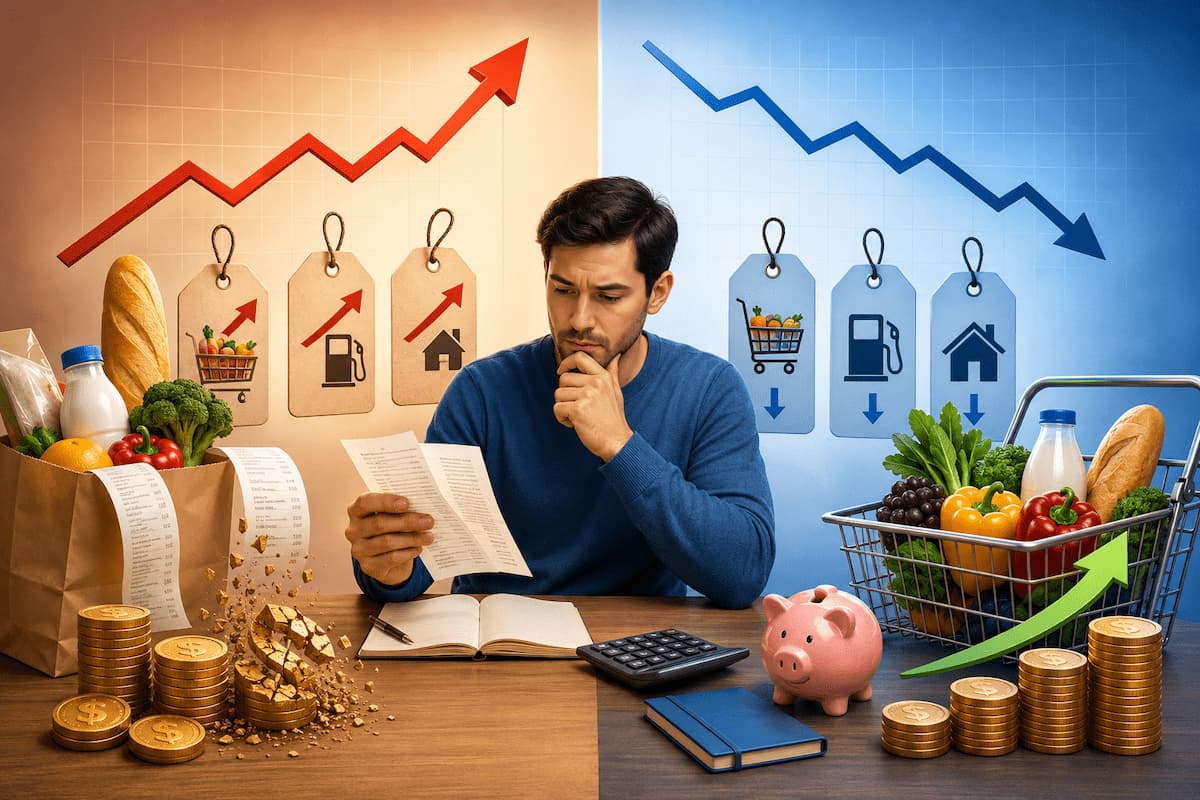
When people hear news about rising prices, expensive groceries, changing interest rates, or economic problems, they often hear the words “inflation” and “deflation.” These terms appear frequently in financial discussions, but many people are unsure what they actually mean and how they influence everyday life. Understanding these economic changes is important because they can affect your salary, savings, investments, loans, and daily spending decisions. A small change in the economy can influence how much your money can buy and how businesses make decisions.
What Is Inflation?
Inflation happens when the general price level of goods and services increases over time. In simple terms, your money loses some of its purchasing power because the same amount of money buys fewer things than before.
For example, imagine you could buy a basket of groceries for $50 five years ago. If inflation causes prices to rise, that same basket may now cost $60 or more. The items have not necessarily become better, but the value of money has changed.
Inflation does not mean that every single product becomes more expensive. Some prices may fall while others rise. Economists usually look at the overall trend across many categories, including food, housing, transportation, healthcare, and energy.
How Inflation Works in Daily Life
Most people experience inflation through everyday purchases. Common examples include:
- Higher grocery bills
- Increased rent or housing costs
- More expensive fuel and transportation
- Higher prices for services such as repairs or education
- Changes in loan and interest costs
Inflation can be especially challenging when wages do not increase at the same speed as prices. If your income stays the same while your expenses rise, your budget becomes tighter.
Is All Inflation Bad?
Not necessarily. A small and stable amount of inflation is often considered a normal part of a growing economy. Moderate inflation can encourage people and businesses to spend, invest, and plan for the future.
The problem occurs when inflation becomes too high or unpredictable. Rapid price increases make it harder for families and companies to make financial decisions.
Tip: Inflation affects everyone differently. A person who spends most of their income on essentials may feel the impact more than someone with flexible spending habits.
What Is Deflation?
Deflation is the opposite of inflation. It occurs when the overall prices of goods and services decrease over time. At first, falling prices may sound positive because consumers can buy products more cheaply.
However, widespread and long-lasting deflation can create serious economic challenges. When people expect prices to keep falling, they may delay purchases because they believe they can get a better deal later.
For example, if someone plans to buy a car but believes prices will drop significantly in the next few months, they may postpone the purchase. When many people make the same decision, businesses earn less money and may reduce production.
How Deflation Affects Purchasing Power
During deflation, the value of money increases because it can buy more goods and services. This sounds helpful, but the benefits depend on the wider economic situation.
A short period of lower prices caused by improved technology or increased efficiency can benefit consumers. For example, electronics often become cheaper as production improves.
The concern is harmful deflation, where falling prices are connected to reduced demand, job losses, and economic slowdown.
Examples of Deflation Effects
- Businesses lower prices to attract customers.
- Companies may reduce hiring because profits decline.
- Workers may face slower wage growth.
- People may delay spending decisions.
- Debt becomes harder to repay because the real value of money owed increases.
Warning: Lower prices do not always mean a healthier economy. Falling prices combined with unemployment and weak business activity can create serious problems.
Inflation vs Deflation: Key Differences
Inflation and deflation are opposite economic conditions, but both influence how people save, spend, borrow, and invest money. Understanding their differences helps you make better financial decisions.
| Feature | Inflation | Deflation |
|---|---|---|
| Meaning | General increase in prices over time | General decrease in prices over time |
| Value of Money | Money loses purchasing power | Money gains purchasing power |
| Consumer Behavior | People may buy sooner before prices rise | People may delay purchases expecting lower prices |
| Business Impact | Costs may rise, but revenue may increase | Lower sales can reduce profits |
| Debt Impact | Debt may become easier to repay over time | Debt may become harder to repay |
| Main Risk | Loss of purchasing power | Economic slowdown |
Simple Example: Buying a Phone
Imagine you want to buy a smartphone.
During inflation, the phone price may increase from $500 to $550 because production costs and demand have changed. Waiting too long may mean paying more. During deflation, the price may drop from $500 to $450. Waiting could save money, but if businesses reduce production and jobs become uncertain, the economy may face bigger challenges.
What Causes Inflation?
Inflation can happen for several reasons. Economists usually group the causes into three major categories: increased demand, higher production costs, and changes in money supply.
1. Demand-Pull Inflation
Demand-pull inflation occurs when consumers want more goods and services than businesses can provide. When demand rises faster than supply, companies may increase prices.
For example, if many people suddenly want to buy homes but there are not enough houses available, property prices may rise.
2. Cost-Push Inflation
Cost-push inflation happens when the cost of producing goods increases. Businesses often pass these higher costs to customers through higher prices.
Common causes include:
- Higher energy costs
- More expensive raw materials
- Supply chain problems
- Increased labor costs
3. Increase in Money Supply
Money supply refers to the amount of money available in an economy. If money grows much faster than the production of goods and services, prices can increase because more money is competing for the same amount of products.
Expert Tip: Inflation is not caused by only one factor. Economic conditions usually change because of several connected events happening together.
What Causes Deflation?
Deflation can occur when prices across the economy begin to fall for a long period. Like inflation, deflation usually does not happen because of one single reason. It is often caused by several economic changes happening together.
1. Reduced Consumer Demand
One common cause of deflation is a decrease in consumer spending. When people become worried about the economy, job security, or future income, they may save more money and buy fewer products. When businesses notice fewer customers, they may lower prices to encourage sales. If this continues across many industries, overall prices can decline.
For example, if people stop buying new cars because they are uncertain about the future, car manufacturers may offer discounts to attract buyers. If demand remains weak, companies may reduce production and investment.
2. Increased Supply of Goods
Sometimes deflation happens because businesses produce more goods than consumers want to buy. When there is too much supply and not enough demand, sellers often reduce prices.
A simple example is seasonal products. After a holiday, stores often reduce prices on decorations because demand decreases. Temporary price drops like this are normal and are not always harmful. The concern appears when excess supply affects the entire economy for a long time.
3. Falling Asset Prices
Deflation can also happen when the value of assets such as homes, stocks, or business investments declines significantly. When asset values fall, people and companies may feel less financially secure. They may reduce spending, which can slow economic activity even further.
4. Reduced Money Supply or Credit Availability
When banks provide fewer loans, businesses and consumers may have less access to money for spending and investment. Lower spending can reduce demand and contribute to falling prices. Credit availability plays an important role because many businesses depend on loans to expand, hire workers, and purchase equipment.
Tip: A small decrease in prices can benefit consumers, but a long period of falling prices combined with weak economic activity can create challenges.
How Inflation and Deflation Affect Consumers
Inflation and deflation directly affect everyday financial decisions. They influence how much you pay for necessities, how you save money, and how you plan for future expenses.
Impact of Inflation on Consumers
When inflation rises, consumers often notice changes in their regular expenses first. Basic needs such as food, housing, transportation, and healthcare may become more expensive.
| Area | Possible Inflation Effect |
|---|---|
| Groceries | Food prices may increase, requiring adjustments to monthly budgets. |
| Savings | Money kept without earning interest may lose purchasing power. |
| Loans | Interest rates may rise as central banks try to control inflation. |
| Income | Workers may need wage increases to maintain their lifestyle. |
Impact of Deflation on Consumers
Deflation can make some products cheaper, but the overall effects depend on why prices are falling.
- Consumers may pay less for goods and services.
- People with savings may benefit because money has more buying power.
- Borrowers may struggle because debts become more expensive in real terms.
- Job opportunities may decrease if businesses reduce costs.
How to Manage Your Money During Inflation
Inflation can reduce the value of money over time, but smart financial habits can help you handle rising costs more effectively.
1. Review Your Budget Regularly
A budget helps you understand where your money goes. During inflation, reviewing your expenses becomes more important because costs may change from month to month.
Focus on essential categories such as the following:
- Housing
- Food
- Transportation
- Insurance
- Healthcare
2. Avoid Unnecessary Lifestyle Inflation
Lifestyle inflation happens when people increase their spending as their income grows. While improving your lifestyle is normal, spending every extra dollar can make financial pressure worse during periods of rising prices.
Try to balance enjoying your income while continuing to save and invest for future needs.
3. Build an Emergency Fund
An emergency fund provides protection when unexpected expenses appear. Inflation can make emergencies more expensive, so having accessible savings can reduce financial stress.
Many financial experts recommend building savings that can cover several months of essential expenses, depending on your personal situation.
4. Consider Long-Term Investments Carefully
Cash savings are useful for short-term needs, but long-term financial goals often require planning beyond simply holding money.
Different investments may react differently during inflation. Before making decisions, understand the risks and consider your financial goals.
5. Improve Your Financial Skills
Learning basic money management skills can help you make better choices during changing economic conditions.
Useful skills include:
- Comparing prices before buying
- Understanding interest rates
- Managing debt responsibly
- Creating realistic financial goals
Best Practice: The goal is not to predict every economic change. The goal is to build financial habits that work in different situations.
How to Prepare for Deflation
Deflation may seem easier because prices fall, but preparation is still important. The main challenge during deflation is often economic uncertainty rather than the lower prices themselves.
1. Manage Debt Carefully
During deflation, the real value of debt can increase. This means the money you owe may become harder to repay if your income decreases.
Avoid taking unnecessary loans and create a clear repayment plan for existing debts.
2. Maintain Stable Savings
Having savings provides flexibility during uncertain economic periods. It allows you to handle emergencies without depending completely on credit.
3. Focus on Career Stability
During deflation, businesses may become more cautious with hiring and expansion. Improving your skills and maintaining professional growth can help protect your income.
4. Avoid Panic Decisions
Economic news can create fear, but making rushed financial decisions based on headlines can cause mistakes.
Instead:
- Review your personal financial situation.
- Understand your goals.
- Make decisions based on facts rather than emotions.
Common Misunderstandings About Inflation and Deflation
Many people have incorrect assumptions about inflation and deflation. Understanding these common mistakes can improve financial decision-making.
Mistake 1: Thinking Inflation Means All Prices Rise
Inflation refers to an overall increase in prices. Some products may become cheaper while others become more expensive at the same time.
Mistake 2: Believing Deflation Is Always Good
Lower prices can help shoppers, but widespread deflation may signal weak economic activity and job problems.
Mistake 3: Ignoring Personal Financial Differences
Economic changes affect people differently. A homeowner, renter, borrower, and saver may experience inflation or deflation in different ways.
Mistake 4: Making Decisions Based Only on Headlines
Economic news often focuses on dramatic changes. Personal financial decisions should consider your own income, expenses, goals, and risk tolerance.
Practical Ways to Understand Economic Changes
Understanding inflation and deflation becomes easier when you connect these ideas to real-life situations. Economic terms may sound complicated, but they describe changes that affect ordinary decisions such as shopping, saving, borrowing, and planning.
Example 1: Buying Everyday Items
Imagine a person spends $300 each month on groceries. During a period of inflation, the same groceries may cost $330 or more. The person may need to adjust their budget, compare prices, or find ways to reduce unnecessary spending.
During deflation, the same groceries might become slightly cheaper. However, if the price decrease happens because businesses are struggling and unemployment rises, the overall situation may still be challenging.
Example 2: Saving Money
Suppose someone keeps $10,000 in a basic savings account. During inflation, if prices rise faster than the money earns interest, the real purchasing power of those savings decreases.
During deflation, that same amount of money may buy more goods and services. However, if the person loses income or faces financial uncertainty, the benefit may be limited.
Example 3: Borrowing Money
Inflation and deflation can affect borrowers differently.
- During inflation, fixed-rate borrowers may find repayments easier over time because wages and prices may increase.
- During deflation, debt payments may feel heavier because money becomes more valuable.
This is why understanding economic conditions is useful when making major decisions such as taking a mortgage, starting a business, or making large purchases.
Building Financial Habits That Work in Any Economy
No one can perfectly predict whether inflation or deflation will happen in the future. Instead of trying to guess every economic movement, focus on financial habits that provide stability in different situations.
Create a Flexible Budget
A flexible budget allows you to adjust when prices or income changes. Instead of creating a budget that only works under perfect conditions, include room for unexpected changes.
A strong budget usually includes the following:
- Essential living costs
- Emergency savings
- Debt payments
- Long-term goals
- Personal spending
Protect Your Purchasing Power
Purchasing power describes how much your money can buy. During inflation, protecting purchasing power becomes especially important.
Helpful strategies include:
- Increasing financial knowledge
- Avoiding unnecessary debt
- Building income skills
- Making informed saving and investment decisions
Keep Learning About the Economy
Economic conditions change over time. Learning basic financial concepts helps you understand news reports and make better choices. You do not need to become an economist. Understanding a few important ideas, such as inflation rates, interest rates, and employment trends, can already improve your financial awareness.
Conclusion
Inflation and deflation are more than economic words used in financial news. They describe changes that affect everyday life, from grocery bills and housing costs to savings, loans, and business decisions. Inflation reduces the purchasing power of money because prices generally rise. Deflation increases purchasing power because prices generally fall, but long periods of deflation can create economic difficulties. Neither condition is completely good or bad on its own. The effects depend on the speed of change and the overall health of the economy.
The most useful approach is not trying to predict every economic movement. Instead, focus on building strong financial habits. Creating a budget, saving consistently, understanding debt, and improving financial knowledge can help you handle different economic environments. By understanding how inflation and deflation work, you can make more informed choices about spending, saving, and planning for the future.
References and Further Reading
The following sources provide reliable information about inflation, deflation, and economic indicators:
- Federal Reserve Education: Resources explaining inflation, monetary policy, and economic concepts. https://www.federalreserve.gov/education/
- European Central Bank (ECB): Information about price stability, inflation, and monetary policy. https://www.ecb.europa.eu/
- International Monetary Fund (IMF): Research and educational resources about global economic conditions. https://www.imf.org/
- World Bank: Economic research and development information. https://www.worldbank.org/
- U.S. Bureau of Labor Statistics: Official information about consumer prices and inflation measurements. https://www.bls.gov/
- Organization for Economic Co-operation and Development (OECD): Economic reports and analysis. https://www.oecd.org/
