
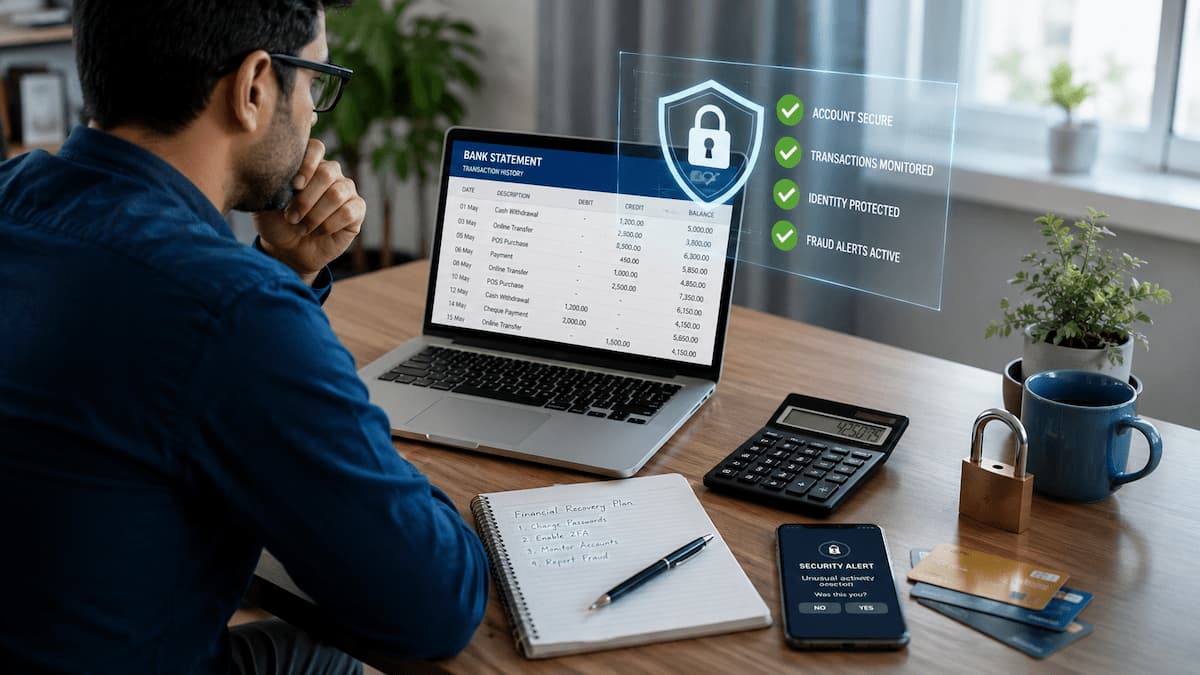
Discovering that you’ve been the victim of fraud can be overwhelming. Whether someone stole money from your bank account, used your credit card without permission, tricked you through an online scam, or stole your personal information, the experience can leave you feeling confused and worried about what comes next.
The good news is that financial fraud does not have to define your future. While recovering may take time, there are clear steps you can follow to reduce the damage, protect your accounts, and regain control of your financial life. Acting quickly often makes a significant difference because banks, credit card companies, and government agencies have systems designed to help fraud victims.
Many people focus only on replacing the lost money, but true recovery involves much more. You also need to protect your identity, monitor your credit, review your financial habits, and learn how to recognize future scams before they succeed. This guide explains everything in simple language. Whether you’re dealing with identity theft, online banking fraud, investment scams, or unauthorized purchases, you’ll learn practical actions that can help you recover with confidence.
Understanding Financial Fraud
Financial fraud happens whenever someone illegally obtains money, personal information, or access to financial accounts through deception or theft. Fraud has become more common because many financial activities now happen online. Criminals continuously develop new ways to trick people into sharing sensitive information.
Fraud can affect anyone regardless of age, income, education, or technical knowledge. Even experienced internet users occasionally fall victim to sophisticated scams that appear genuine.
Common Types of Financial Fraud
| Fraud Type | Description | Possible Impact |
|---|---|---|
| Credit Card Fraud | Unauthorized purchases using your card details. | Unexpected charges and financial loss. |
| Identity Theft | Someone uses your personal information. | Loans, accounts, or debts opened in your name. |
| Online Banking Fraud | Hackers access your bank account. | Money transfers without permission. |
| Investment Scams | Fake investment opportunities. | Loss of savings. |
| Phishing | Emails or texts pretending to be trusted companies. | Stolen passwords and financial information. |
Tip: Fraud often succeeds because criminals create a sense of urgency. They may pressure victims to act quickly before they have time to verify the request.
Understanding the type of fraud you’ve experienced helps you determine which recovery steps should be your highest priority.
What to Do in the First 24 Hours
The first day after discovering fraud is extremely important. Quick action can prevent additional financial losses and improve your chances of recovering stolen funds.
Immediate Steps
- Stay calm and avoid making rushed decisions.
- Check all financial accounts for suspicious activity.
- Take screenshots of unauthorized transactions.
- Change passwords for affected accounts immediately.
- Enable two-factor authentication where available.
- Notify your financial institutions.
- Report the fraud to the appropriate authorities.
Many victims panic and focus only on the largest unauthorized transaction. However, scammers often make several smaller transactions before attempting larger withdrawals. Carefully review every recent transaction across all your accounts.
Warning: Never continue communicating with the scammer, even if they promise to return your money. Many fraudsters attempt a second scam by pretending they can help recover stolen funds.
Contact Your Bank and Financial Institutions
Your bank should be one of the first organizations you contact. Most financial institutions have dedicated fraud departments that operate around the clock.
Information to Prepare
- Your account number
- Date of suspicious activity
- Transaction amounts
- Merchant names if available
- Screenshots or emails related to the fraud
- Any communication with the scammer
Ask Your Bank About
- Freezing affected accounts
- Replacing debit or credit cards
- Reversing unauthorized transactions
- Temporary account restrictions
- Additional fraud monitoring
- Updating online banking credentials
Some banks may issue provisional credits while they investigate disputed transactions. Investigation times vary depending on the type of fraud and local regulations.
| Action | Why It Matters |
|---|---|
| Freeze compromised account | Stops additional unauthorized transactions. |
| Replace payment cards | Prevents criminals from using stolen card numbers. |
| Change login credentials | Blocks future unauthorized access. |
| Enable fraud alerts | Improves early detection of suspicious activity. |
Protect Your Identity
If fraud involves personal information such as your Social Security number, passport, driver’s license, tax information, or other sensitive documents, identity protection becomes just as important as recovering stolen money. Identity thieves often keep stolen information for months before using it. That means the financial damage may continue long after the original fraud occurred.
Important Identity Protection Steps
- Change passwords for all important accounts.
- Use a password manager if possible.
- Create unique passwords for every account.
- Enable multi-factor authentication.
- Monitor email accounts for suspicious login attempts.
- Watch for unexpected bills or collection notices.
- Check whether new accounts have been opened in your name.
Expert Tip: Your email account often becomes the primary target after fraud because password reset links for many financial services are sent there. Protect your email with the strongest available security settings.
If identity theft has occurred, consider placing a fraud alert or credit freeze with the major credit reporting agencies. These tools can make it more difficult for criminals to open new accounts using your personal information.
Document Everything During Your Recovery
Keeping detailed records may seem like extra work, but it can save time and frustration later. Banks, insurance companies, law enforcement agencies, and credit bureaus may all request evidence while reviewing your case.
Create a Recovery Folder
Store both digital and printed copies of important documents whenever possible.
Your folder should include:
- Bank statements
- Credit card statements
- Police reports (if filed)
- Fraud complaint reference numbers
- Emails from financial institutions
- Screenshots of suspicious activity
- Copies of identity verification documents
- Notes from phone conversations, including dates and names of representatives
A simple timeline of events can also help. Record when you first noticed the fraud, when you contacted each organization, and what actions were taken. This information can be valuable if you need to follow up or dispute a decision later.
Best Practice: Save confirmation emails and reference numbers immediately. Having organized records can make future conversations with banks and investigators much easier.
Monitor Your Credit Reports Regularly
After fraud occurs, many people assume the problem is over once their bank replaces a card or refunds unauthorized transactions. Unfortunately, that isn’t always the end of the story. Criminals may continue using stolen personal information months later, which is why monitoring your credit is an important part of financial recovery.
Your credit report contains information about loans, credit cards, payment history, and other financial accounts. Reviewing it regularly helps you spot unauthorized activity before it becomes a bigger problem.
What to Look For
- Accounts you never opened.
- Unknown addresses or phone numbers.
- Hard credit inquiries you did not authorize.
- Incorrect personal information.
- Unexpected loan balances.
- Missed payments on accounts that aren’t yours.
| Item to Review | Why It Matters |
|---|---|
| New Credit Accounts | May indicate identity theft. |
| Personal Information | Incorrect details can signal fraudulent activity. |
| Credit Inquiries | Shows whether someone tried to obtain credit. |
| Payment History | Helps identify accounts you don’t recognize. |
Tip: Continue monitoring your credit for at least one year after recovering from fraud. Some identity thieves wait several months before using stolen information.
Rebuild Your Financial Stability
Recovering emotionally is important, but rebuilding your financial health deserves equal attention. Even if most of your money is returned, you may still face temporary cash flow problems, delayed bills, or unexpected expenses. Instead of trying to solve everything at once, create a simple recovery plan that focuses on the most important priorities first.
Start With Your Monthly Budget
Review your income and expenses to understand your current financial position. You may need to delay non-essential purchases until your situation becomes stable again.
Focus on paying:
- Housing costs
- Utilities
- Food
- Insurance premiums
- Loan payments
- Essential transportation
Rebuild Your Emergency Fund
If fraud forced you to use your savings, rebuilding your emergency fund should become a priority. Even small weekly contributions can gradually restore financial security.
| Recovery Goal | Suggested Action |
|---|---|
| Replace Lost Savings | Set aside a fixed amount each month. |
| Reduce Debt | Continue making regular payments whenever possible. |
| Improve Cash Flow | Limit unnecessary spending temporarily. |
| Track Expenses | Review your budget every month. |
Expert Tip: Financial recovery is rarely instant. Small, consistent improvements usually produce better long-term results than trying to recover everything immediately.
Strengthen Your Financial Security for the Future
One positive outcome of recovering from fraud is that many victims become much more aware of online security. The habits you build now can significantly reduce the chance of becoming a victim again.
Create Strong Passwords
Avoid using the same password across multiple accounts. If one account is compromised, criminals often try the same password elsewhere.
Enable Multi-Factor Authentication
Multi-factor authentication adds another layer of protection by requiring a second verification step before someone can access your account.
Keep Software Updated
Install updates for your computer, smartphone, browser, and banking apps as soon as they become available. Many updates include important security fixes.
Watch for Phishing Attempts
Scammers frequently pretend to represent banks, government agencies, delivery companies, or online retailers.
Be cautious if someone
- Requests passwords.
- Asks for verification codes.
- Creates urgency.
- Promises unrealistic rewards.
- Requests payment through gift cards or cryptocurrency.
Warning: Legitimate banks will never ask for your complete password, PIN, or one-time security code through email or text messages.
Common Financial Recovery Mistakes
Many fraud victims unintentionally make mistakes that delay recovery. Learning from these common errors can save both time and money.
| Mistake | Better Approach |
|---|---|
| Waiting too long to report fraud | Notify your bank immediately. |
| Ignoring small suspicious charges | Investigate every unauthorized transaction. |
| Reusing passwords | Create unique passwords for every account. |
| Not checking credit reports | Monitor your credit regularly. |
| Deleting scam emails | Save them as evidence until investigations finish. |
| Trusting recovery scammers | Work only with legitimate financial institutions. |
Recovering Emotionally After Financial Fraud
Financial fraud affects more than your bank account. Many victims experience stress, embarrassment, anxiety, or frustration after realizing they have been deceived. These feelings are completely understandable.
Remember that professional scammers are highly skilled at manipulating trust. Their methods target normal human emotions such as fear, urgency, excitement, and curiosity.
Healthy Ways to Move Forward
- Talk with trusted family members or friends.
- Focus on actions you can control.
- Avoid blaming yourself.
- Celebrate small recovery milestones.
- Learn from the experience without dwelling on it.
Taking positive action often helps restore confidence much faster than worrying about what has already happened.
Creating a Long-Term Fraud Prevention Plan
Good financial security isn’t a one-time task. It becomes part of your regular financial routine.
Monthly Checklist
- Review bank statements.
- Check credit card transactions.
- Update important passwords if necessary.
- Monitor your credit report.
- Review investment accounts.
- Delete suspicious emails.
- Update antivirus software.
Annual Checklist
- Review insurance coverage.
- Check beneficiary information.
- Update emergency contacts.
- Review financial accounts you no longer use.
- Destroy sensitive documents safely.
- Evaluate your online security practices.
Best Practice: Schedule a monthly “financial health check” on your calendar. Spending just 20 minutes reviewing your accounts can help detect fraud before significant damage occurs.
Know When to Seek Professional Help
Some fraud cases are simple and resolved quickly, while others involve identity theft, investment losses, tax fraud, or multiple compromised accounts. In more complicated situations, professional guidance can make recovery easier.
You may benefit from professional assistance if:
- Your identity has been stolen.
- Multiple financial accounts were compromised.
- Your credit report contains several fraudulent accounts.
- You are facing debt collection related to identity theft.
- You have difficulty communicating with financial institutions.
- You believe organized fraud is involved.
Qualified financial advisors, consumer protection agencies, legal professionals, and identity recovery services may provide additional assistance depending on your circumstances.
FAQs
1. Can I recover money that was stolen through fraud?
In many cases, yes. Banks, credit card companies, and payment providers often investigate unauthorized transactions and may reimburse eligible losses. The outcome depends on how the fraud occurred, how quickly you reported it, and the policies that apply to your account. Contact your financial institution as soon as you notice suspicious activity, because delaying your report can reduce the chances of recovering your money.
2. How long does financial recovery usually take?
Recovery varies from case to case. Some unauthorized card transactions are resolved within a few days, while identity theft investigations can take several months. During this period, continue monitoring your accounts, respond promptly to requests for information, and keep copies of all correspondence. Patience and good recordkeeping can make the process much smoother.
3. Should I change all of my passwords after fraud?
Yes. Even if only one account appears to be affected, changing passwords for your email, banking, shopping, and other important accounts is a smart precaution. Use strong, unique passwords for every account and enable multi-factor authentication whenever possible. This reduces the risk of criminals gaining access to additional accounts.
4. What is the difference between a fraud alert and a credit freeze?
A fraud alert tells lenders to take extra steps to verify your identity before approving new credit. A credit freeze is more restrictive because it limits access to your credit report, making it much harder for someone to open new accounts in your name. Both tools can help protect against identity theft, but they serve different purposes.
Conclusion
Recovering from financial fraud can feel overwhelming at first, but it is a process that becomes more manageable when you take one step at a time. Acting quickly, reporting suspicious activity, securing your accounts, and documenting every part of your recovery can significantly reduce the long-term impact of fraud. Recovery isn’t only about replacing lost money. It also involves rebuilding confidence, strengthening your financial habits, and learning how to recognize warning signs before they become serious problems. Simple actions like reviewing account statements regularly, using strong passwords, enabling multi-factor authentication, and monitoring your credit can greatly improve your financial security.
Remember that fraud can happen to anyone. Modern scammers constantly change their tactics, and even cautious people can become victims. Instead of focusing on the mistake, concentrate on protecting yourself moving forward. Every security improvement you make today helps reduce future risk. By following the guidance in this article and staying alert to unusual activity, you can recover from fraud, regain control of your finances, and build a stronger foundation for the future.
References
- Federal Trade Commission (FTC) — https://www.identitytheft.gov/
- Federal Trade Commission — https://consumer.ftc.gov/
- Consumer Financial Protection Bureau (CFPB) — https://www.consumerfinance.gov/
- Federal Deposit Insurance Corporation (FDIC) — https://www.fdic.gov/
- National Institute of Standards and Technology (NIST) Cybersecurity Resources — https://www.nist.gov/cyberframework
- Cybersecurity and Infrastructure Security Agency (CISA) — https://www.cisa.gov/
- USA.gov Consumer Scams — https://www.usa.gov/scams-fraud
- Internet Crime Complaint Center (IC3) — https://www.ic3.gov/
