
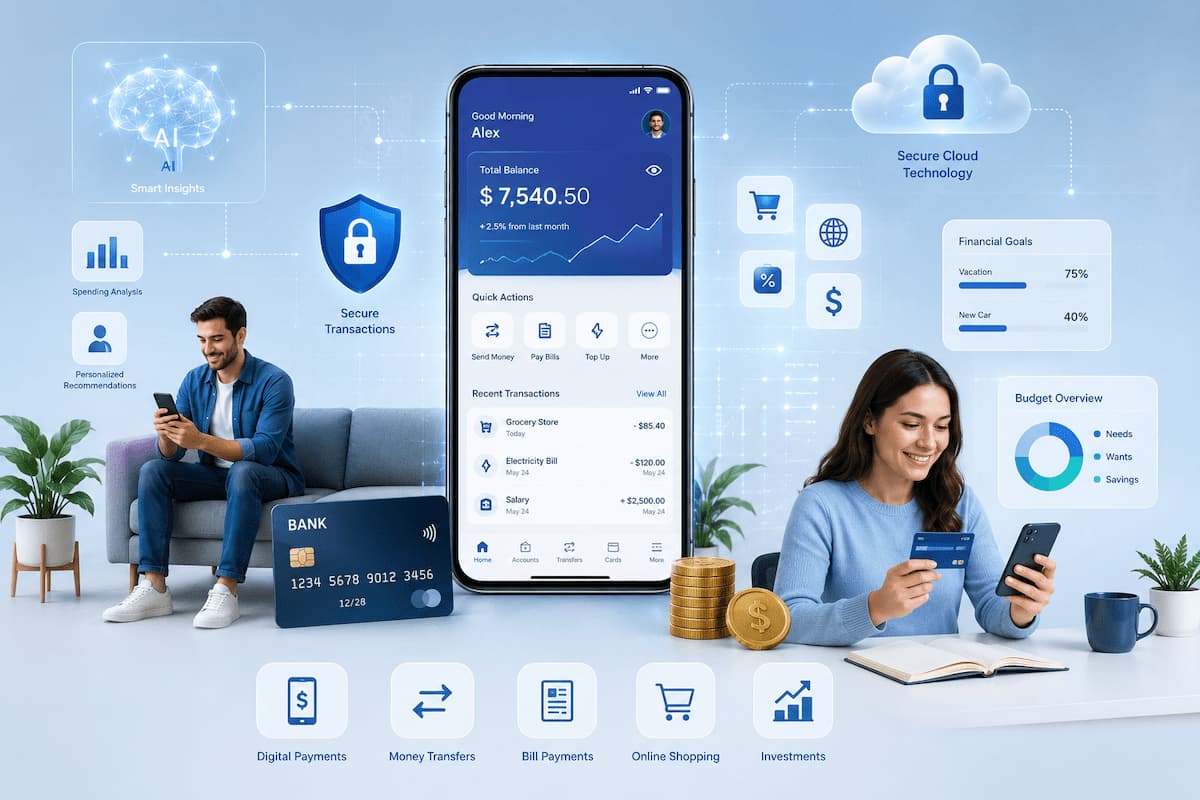
Fintech is short for financial technology. It refers to the use of modern technology to create, improve, or automate financial services. Instead of relying only on traditional banks and financial institutions, fintech uses software, mobile applications, internet services, and advanced computing systems to make financial activities simpler. In simple terms, fintech helps people manage money using technology.
Examples of fintech include:
- Mobile banking applications
- Digital payment platforms
- Online investment services
- Budgeting applications
- Digital lending platforms
- Cryptocurrency services
- Insurance technology solutions
A person checking their spending habits through a budgeting app or sending money through a mobile payment service is already using fintech.
Fintech Is More Than Online Banking
Many people think fintech only means internet banking, but it covers a much wider area. Online banking is one part of fintech, while the larger field includes many technologies that improve financial experiences.
| Traditional Finance | Fintech Approach |
|---|---|
| Visiting a bank branch | Using mobile banking applications |
| Paper forms | Digital verification systems |
| Manual calculations | Automated financial tools |
| Limited banking hours | 24/7 online access |
Tip: Fintech does not completely replace traditional finance. Instead, it uses technology to improve how financial services are delivered.
Why Is Fintech Growing So Quickly?
The rapid growth of fintech is connected to changes in technology, customer expectations, and global access to the internet. People today expect services to be fast, convenient, and available whenever they need them.
1. Increased Smartphone Usage
Smartphones have become powerful financial tools. A person can now perform many tasks that previously required a bank visit.
For example, users can:
- Check account balances
- Transfer money
- Pay utility bills
- Deposit checks digitally
- Monitor investments
2. Demand for Faster Services
Modern consumers prefer quick solutions. Waiting several days for simple financial processes can feel inconvenient when technology can complete many tasks instantly.
3. Better Access to Financial Services
Fintech has helped more people access financial tools, especially in areas where traditional banking services are limited. Digital platforms can reduce barriers by allowing people to create accounts, make payments, and manage money without needing a nearby physical branch.
4. Advances in Technology
Technologies such as artificial intelligence, cloud computing, and data analytics have allowed companies to create smarter financial services.
| Technology | Financial Use |
|---|---|
| Artificial Intelligence | Fraud detection and personalized recommendations |
| Cloud Computing | Secure storage and faster services |
| Mobile Technology | Digital banking and payments |
| Data Analytics | Understanding financial behavior |
Major Types of Fintech Services
Fintech is a broad industry with many different categories. Each category solves different financial problems.
Digital Banking
Digital banking allows customers to manage their accounts through websites or mobile apps instead of visiting a branch.
Common features include:
- Online account management
- Instant notifications
- Digital money transfers
- Electronic statements
Digital Payments
Digital payment systems allow people to send and receive money electronically. These services are widely used for shopping, subscriptions, and personal transfers. Examples include mobile wallets, contactless payments, and online checkout systems.
Investment Technology
Investment-focused fintech platforms make investing easier for beginners. Some provide educational tools, automated investing options, and simple portfolio tracking.
Warning: Easy access to investing does not remove financial risks. Users should understand investments before putting money into any platform.
Digital Lending
Fintech lending platforms use technology to simplify loan applications. Instead of lengthy paperwork, some platforms use digital verification and automated systems to evaluate applications. However, borrowers should always review interest rates, repayment terms, and fees before accepting any financial agreement.
How Digital Banking Is Changing Traditional Banking
Digital banking is one of the most visible examples of fintech. It has changed customer expectations by making many banking activities available from anywhere. Traditional banks are also adopting digital tools because customers want faster and easier experiences.
Key Differences Between Traditional and Digital Banking
| Feature | Traditional Banking | Digital Banking |
|---|---|---|
| Access | Mainly through branches | Available online anytime |
| Paperwork | Often required | Mostly digital |
| Communication | Phone or in-person | Apps and online support |
| Speed | Can take longer | Usually faster |
Benefits of Digital Banking
- Convenient account access
- Faster transactions
- Better spending tracking
- Lower dependence on physical locations
Common Mistakes Users Make
- Using weak passwords
- Ignoring security notifications
- Connecting banking apps to unsafe devices
- Not checking transaction history regularly
The Growth of Digital Payments
Digital payments have become one of the most common uses of fintech. People now pay for products and services through cards, mobile wallets, and online platforms. This shift has changed everyday shopping habits. Small businesses can accept electronic payments, and customers can complete purchases without carrying cash.
Advantages of Digital Payments
- Faster transactions
- Reduced need for cash
- Easy payment tracking
- Improved convenience
Artificial Intelligence in Finance
Artificial intelligence (AI) is becoming an important part of modern financial technology. AI allows computers to analyze large amounts of information, identify patterns, and make useful predictions. In finance, these abilities help companies improve security, customer service, and decision-making.
Many people already interact with AI-powered financial tools without realizing it. For example, when a banking app sends a warning about unusual activity or a financial app suggests ways to reduce spending, AI may be working in the background.
Common Uses of AI in Finance
| AI Application | How It Helps |
|---|---|
| Fraud Detection | Identifies unusual transactions and suspicious activity |
| Chatbots | Provides quick answers to common customer questions |
| Financial Analysis | Finds patterns in financial data |
| Risk Assessment | Helps evaluate financial decisions |
Example: AI Fraud Protection
Imagine someone uses your payment card in a location far away from your usual activity. A traditional system may only discover the problem after damage has occurred. AI systems can analyze transaction patterns and quickly identify that something appears unusual. This allows financial companies to notify customers and prevent potential losses.
Limitations of AI in Finance
Although AI offers many benefits, it is not perfect. Financial decisions should not depend completely on automated systems. AI models can sometimes make mistakes because they depend on the quality of the information they receive.
- Incorrect data can produce incorrect results.
- Automated decisions may not understand personal situations.
- Users should still review important financial choices carefully.
Expert Tip: Use AI-powered financial tools as assistants, not as replacements for your own understanding and judgment.
Blockchain and Modern Financial Systems
Blockchain is another technology often connected with fintech. It is a digital system for recording information in a way that makes changes difficult without proper authorization. Many people first heard about blockchain because of cryptocurrencies, but the technology has applications beyond digital currencies.
How Blockchain Works in Simple Terms
Think of blockchain as a shared digital record book. Instead of one organization controlling all information, copies of the record can exist across multiple connected computers. When a new transaction is added, the system verifies it before recording it. This design can improve transparency and reduce certain types of fraud.
Possible Uses of Blockchain in Finance
- Digital identity verification
- Secure transaction records
- International payments
- Smart contracts
- Asset tracking
Blockchain Does Not Mean Every Financial Problem Is Solved
A common misunderstanding is that blockchain automatically makes every financial service safer or better. In reality, blockchain is a tool. Its usefulness depends on how it is designed and applied. Users should be careful when dealing with blockchain-based financial products because risks can still exist.
Benefits and Risks of Fintech
Like any technology, fintech provides advantages while also creating new challenges. Understanding both sides helps users make better decisions.
Main Benefits of Fintech
| Benefit | Explanation |
|---|---|
| Convenience | Financial services can often be accessed anytime from anywhere. |
| Speed | Digital processes can reduce waiting times. |
| Accessibility | More people can access financial tools. |
| Better Tracking | Apps can help users monitor spending and saving. |
| Innovation | New tools create more financial options. |
Potential Risks of Fintech
| Risk | How to Reduce It |
|---|---|
| Cybersecurity threats | Use strong passwords and security features. |
| Privacy concerns | Review app permissions and data policies. |
| Online scams | Avoid unknown links and suspicious offers. |
| Technology dependence | Keep records and understand your finances. |
| Hidden fees | Read terms before using services. |
Common Fintech Mistakes to Avoid
Many problems happen because users focus only on convenience and ignore safety.
- Downloading financial apps from unofficial sources.
- Sharing login details with others.
- Ignoring software updates.
- Accepting financial products without reading conditions.
- Using public Wi-Fi for sensitive transactions.
How to Use Fintech Safely
Fintech can make financial management easier, but users must follow good security habits. Protecting personal information is one of the most important parts of using digital financial services.
1. Use Strong Account Security
A strong password is the first layer of protection. Avoid simple passwords that contain common words, birthdays, or easily guessed information.
Whenever available, enable multi-factor authentication. This adds an additional verification step when logging in.
2. Keep Apps Updated
Software updates often include important security improvements. Delaying updates can leave devices vulnerable to known problems.
3. Check Transactions Regularly
Reviewing account activity helps identify mistakes or unauthorized transactions early.
A simple habit of checking financial activity weekly can prevent larger problems later.
4. Understand Before You Click
Scammers often create fake messages that look like they come from banks or payment services. They may ask users to confirm passwords, account numbers, or personal details.
Warning: Legitimate financial organizations usually do not ask customers to provide sensitive login information through unexpected messages.
Fintech Safety Checklist
- Download apps only from trusted sources.
- Enable two-factor authentication.
- Use device security features.
- Avoid sharing personal financial information.
- Read privacy policies before using services.
- Monitor accounts regularly.
The Future of Fintech
Fintech continues to develop as technology improves. Future financial services will likely become more personalized, automated, and connected. However, the goal of fintech is not simply to create more technology. The real purpose is to solve financial problems and make services easier to use.
Trends Shaping the Future of Finance
1. More Personalized Financial Services
Future financial tools may use data analysis to provide more personalized budgeting advice, saving suggestions, and financial education.
Instead of giving the same recommendations to everyone, systems may adjust suggestions based on individual needs and goals.
2. Improved Digital Identity Systems
Secure digital identity solutions may make it easier for people to verify themselves online while reducing paperwork.
3. Greater Use of Automation
Automation may help complete routine financial tasks, such as bill payments, savings transfers, and financial reporting.
4. Stronger Security Technology
As digital finance grows, cybersecurity will become even more important. Companies will continue developing better methods to protect users and transactions.
How Businesses Are Using Fintech
Fintech is not only changing personal finance. Businesses of all sizes are also using financial technology to improve operations.
Examples of Business Uses
- Online payment systems for customers
- Digital accounting tools
- Automated payroll solutions
- Financial data analysis
- Online lending services
Small businesses especially benefit from fintech because digital tools can provide services that previously required expensive systems or large financial departments.
Benefits for Small Businesses
| Challenge | Fintech Solution |
|---|---|
| Managing payments | Digital payment platforms |
| Tracking expenses | Financial management software |
| Accessing funding | Online lending platforms |
| Customer transactions | Fast digital checkout options |
Businesses should still evaluate fintech providers carefully. Security, reliability, customer support, and costs should all be considered before adopting a financial technology solution.
Choosing the Right Fintech Tools
With thousands of financial apps and services available, choosing the right tool can be difficult. The best choice depends on your personal needs.
Questions to Ask Before Using a Fintech Service
- What problem does this tool solve?
- Is the company trustworthy?
- How does it protect user information?
- Are there hidden fees?
- Can I easily access customer support?
A useful financial tool should make your life easier without creating unnecessary risks.
How Fintech Helps Improve Financial Literacy
One of the most useful effects of fintech is that it can help people understand their own financial habits. In the past, many people only looked at their bank balance when they needed to make a payment. Today, financial apps can provide detailed information about spending, saving, and planning. Better information can lead to better decisions. When people understand where their money goes, they can create realistic budgets and identify areas where they may be spending unnecessarily.
Examples of Financial Education Features
- Automatic spending categories
- Monthly financial reports
- Savings goal tracking
- Budget reminders
- Investment learning resources
However, technology alone cannot guarantee good financial decisions. Users still need basic financial knowledge and should take time to understand the tools they use.
Tip: A financial app is most valuable when it helps you build better habits, not when it simply shows numbers on a screen.
Fintech and Financial Inclusion
Financial inclusion means making financial services available to more people, including those who have traditionally had limited access to banking. Fintech can support financial inclusion by reducing some barriers that prevent people from using traditional financial services. Digital platforms may allow users to access payments, savings tools, and other services without needing a nearby bank branch.
How Fintech Supports Inclusion
- Mobile payment systems can help people send and receive money easily.
- Digital accounts can reduce dependence on physical locations.
- Online financial education can help users learn money management skills.
- Digital records can simplify some financial processes.
Despite these benefits, challenges remain. Reliable internet access, digital skills, and cybersecurity awareness are important factors in ensuring that everyone can benefit from financial technology.
FAQs
1. What does fintech stand for?
Fintech stands for financial technology. It describes the use of technology to improve financial services and make activities such as payments, banking, investing, and money management easier. Fintech combines financial knowledge with digital tools like applications, software, artificial intelligence, and online platforms. It affects both individuals and businesses by creating faster and more convenient ways to handle financial tasks.
2. Why has fintech become popular?
Fintech has become popular because people want faster, easier, and more accessible financial services. Smartphones, internet access, and improvements in software have made it possible to manage money from almost anywhere. Businesses also use fintech because digital solutions can reduce costs, improve customer experiences, and simplify financial processes.
3. What is the biggest advantage of fintech?
The biggest advantage of fintech is convenience. Users can often complete financial tasks quickly without visiting physical locations or handling large amounts of paperwork. Fintech also improves access to financial tools and helps people track their money more effectively. However, convenience should always be balanced with careful security practices.
4. What are the risks of using fintech apps?
The main risks include cybersecurity threats, privacy concerns, online scams, and misunderstanding financial products. Users can reduce these risks by choosing trusted providers, using strong passwords, enabling security features, and reading service agreements carefully. Responsible use is an important part of benefiting from financial technology.
Conclusion
Fintech has changed the way people interact with money. From mobile payments and digital banking to artificial intelligence and blockchain, technology is creating new ways to manage financial activities. The biggest benefit of fintech is not simply speed or convenience. Its real value comes from helping people and businesses access useful financial tools, make informed decisions, and manage money more effectively.
At the same time, users should remember that technology does not remove the need for careful financial choices. Security awareness, understanding terms and conditions, and responsible money management remain essential. Whether you use a banking app, a budgeting tool, or a digital payment service, understanding fintech helps you make better decisions in an increasingly digital financial world.
References and Further Reading
The following sources provide reliable information about financial technology, digital finance, and related topics:
- Bank for International Settlements (BIS) – Research and publications about financial innovation and digital finance.
- World Bank – Research on digital financial services and financial inclusion.
- International Monetary Fund (IMF) – Reports and analysis about fintech, digital currencies, and financial systems.
- National Institute of Standards and Technology (NIST) – Cybersecurity guidance and technology standards.
- Federal Reserve – Information and research about payments, banking technology, and financial innovation.
- Organisation for Economic Co-operation and Development (OECD) – Studies on digital transformation and financial markets.
