
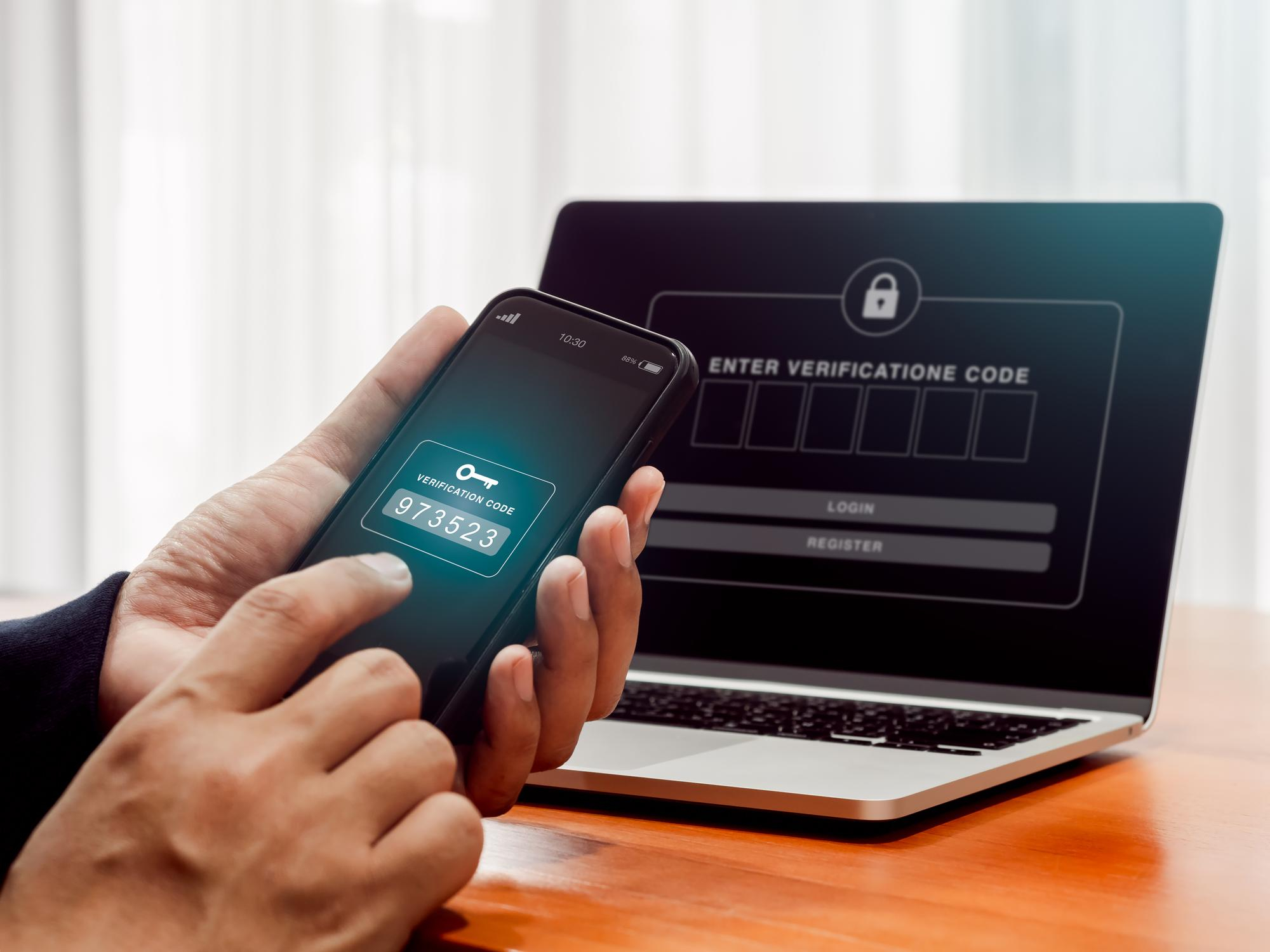
Upon entering a username and password, users expect to see their checking account balance. Instead, they see a request to enter a security code sent to their phone. Sometimes, people just want to see if a deposit has cleared and consider this step to be a needless hassle.
Have people ever taken time to think about phone security codes? Financial firms implement security codes to prevent the checking account from being a digital wallet that people can spend from.
When people check their banking accounts, they expect the money to be exactly as they left it. If phone security codes were absent, uncertainty would arise about whether the person logging on is truly the account holder.
People can consider phone security codes to be digital padlocks on their checking accounts.
The Real Reason Behind That Security Text
People can think of their checking accounts like a house. Most people would never consider going on vacation without locking their house. Doing so would likely make for an uncomfortable vacation. In the same way, people should consider keeping their checking accounts locked and without phone security codes.
Gone are the days of robberies involving masks, guns, and getaway cars. The modern robber is a cybercriminal. A modern-day bank robbery uses computers to guess and steal passwords. Cybercriminals will even trick the victim into giving up their credentials. Once someone steals your password, they enjoy access to your digital possessions.
Identity verification is an additional measure that is warranted. It accounts for the likelihood of a password being guessed or stolen. It is an additional measure that provides a sufficient deterrent to even the best of hackers. A security text will still be on your phone, and the robber will still be unable to access your finances.
How Banks Make Sure You Are Actually You
This is where “Multi Factor Authentication” comes in. Don’t let the fancy name distract you. It simply uses multiple methods to verify your identity and keep your accounts secure. Security professionals usually break these methods down into three simple categories.
Passwords and PINs (What You Know)
This is the oldest and most familiar way to prove your identity. A password, a four-digit PIN, or the answer to a secret question falls into this category. It relies entirely on information that resides in your brain.
Although they can serve as the first line of defense, there are issues with passwords. People often create one password for all the sites that require a password, and hackers find it easy to discover these passwords. For this reason, banks do not use “what you know” as the sole method of authorizing access to accounts.
Your Phone or Security Token (What You Have)
This is when you receive a text with a code, and you enter that code to gain access. When logging in, the bank sends a one-time-use code to a device that they know you possess. This provides the bank with assurance that you possess a specific item.
Instead of receiving a text, you may receive a code via an authentication app. These apps create a new code every 30 seconds.
Fingerprints and Face Scans (What You Are)
The newest and most effective way that banks are securing accounts and verifying identity is by offering Bank apps that allow you to log in with their biometric feature that quickly scans your face or your fingerprint.
Biometric features are irreplaceable by a person’s physical body, making them the most effective and secure method.
Why This Extra Step is Your Best Friend
They can feel like tedious extra steps, but security measures have a lot of upsides for the average user. They protect your money, for starters. Without security checks, malicious actors could manipulate your transfer requests and leak your sensitive information. Security checks also help prevent scammers from creating new accounts using your name and information.
In addition to the immediate benefits to your safety, these systems also help lower the underlying cost of banking and transactions. If a hacker successfully steals your money, the bank is obligated to cover your loss, and they’ll eventually raise the cost of banking services for everyone to cover the losses. Stopping fraud from happening helps keep banking costs manageable.
Knowing that security measures are in place to protect your information brings you peace of mind. You can rest assured that even if you use an untrusted WiFi while working from your local coffee shop, your money is safe.
Behind the Scenes: The Rules Banks Have to Follow
Security measures aren’t in place just because banks want to take extra steps for the consumer. They are mandated by law. Banks cannot compromise and must ensure identity verification to protect sensitive information.
Government regulators conduct audits on banks and other financial institutions to ensure that their physical and electronic security systems function as intended. A bank that permits fraud to occur by failing to implement proper identity verification systems would be liable for a massive financial penalty and would be subjected to significant legal liability. The regulations guarantee that consumers receive a high level of protection across the board, regardless of the bank they use.
Take Charge of Your Account Security
While you hold the keys to your account, your bank has built the infrastructure to control and secure your funds. Spend a couple of minutes reviewing your bank’s security settings. Check that your number is updated for receiving verification. Enable two-factor authentication wherever possible. Push yourself to embrace the minor inconvenience of an additional step to securely access your account.
Personal safety and convenience are the prices we pay for the security of our finances each time we log into our bank.
FAQs
What if I receive a verification code that I did not request?
If you receive a login code through text or email and are not in the process of logging in, someone has your password. You cannot share this code with people. Type yourself to log into your account; do not follow a link, and update your password to something new and strong.
Are verification codes sent via text message totally safe?
Using a text message is a definite improvement over using just a password. However, there are still some security flaws. Advanced scammers may intercept text messages. The safest option is to switch to an app like an authenticator app or use your fingerprint if your bank provides that option.
Why do I have to verify my identity on my bank’s website every time I log on?
Banks monitor the devices you log on to. If you travel to a new state, buy a new computer, or reset your browser’s cookies, the bank tracks that. They make you confirm your identity to ensure that there is not an unauthorised person accessing your account.
Do my bank accounts get locked if I can’t verify my identity?
Yes. Entering the wrong password or failing identity verification several times locks your account. The bank does this as a precaution against hacks. If this ever is your case, customer service needs to be contacted, or your ID needs to be shown to your account’s retail location.
